“Olivia” Z. Milgrom

Physician-informaticist, builder, and innovator

a.k.a. the Hair-dryer Calligrapher
“Olivia” Zheng Milgrom, MD, MPH

Bringing clinical rigor into AI systems through knowledge architecture & reasoning

I bridge biomedical ontologies, Datalog logic, and LLMs — integrating clinical knowledge graphs and LLMs in both directions. Beyond the AI hype and impressive demos: building neurosymbolic infrastructure in production, where domain experts keep the steering wheel and correctness matters.

NLM Informatics Fellowship Trained Knowledge Content Engineering & Management Bidirectional Neuro-Symbolic AI Product Customer-facing Enterprise Solution
Drag me over the words — or her hair ↑
  • Explainable
  • Governable
  • Scalable
  • Configurable

The full evidence-based medicine cycle — lived, practiced, and now built into AI.

Learning Health System cycle: Bedside Care, Real-World Evidence, Evidence Synthesis, Knowledge Dissemination, Closing the Loop — all feeding into Knowledge Architecture and AI at the center
Trust has to be built where the domain knowledge lives.

Rooted in medicine — not a hammer looking for nails.

My approach to clinical AI grows out of my history across the entire evidence-based medicine lifecycle. I know exactly where clinical knowledge breaks down — and I’m driven to lift the unbearable burden of the clinical knowledge explosion from the people who carry it every day.

My version of an unconventional path
Roots
Proofs and arts.

I grew up competitive in math and science, and in love with art — drawing, singing, the stage. What tied them together was a love of innovation. Once, I designed a stage show to bring Eastern Asian calligraphy to life through chemistry — a hair dryer wrote the script with heat, and erased it with cool air.

Illustration for demonstration only
Medicine
Medicine was meaningful enough.

A proof holds inside a closed world. Medicine mattered more — and its knowledge operating in an open world drew me in as a complex system: evidence that keeps evolving, exceptions that change everything, logic that rarely stays clean.

The spark
Then, the boiling point.

As clinical knowledge grew faster than anyone could carry it, the work of Yuval Noah Harari gave me my aha moment — years before large language models arrived: AI was going to radically change how medicine is practiced.

Today
Now: neurosymbolic.

I didn’t guess at the solution; I went into health informatics and the neurosymbolic path. Having lived, practiced, and implemented the full evidence-based medicine cycle, I now build the guardrails it demands: logic and language models keeping each other honest in production.

The craft
Complex inside, simple to use.

I walked into clinical medicine and formal reasoning because they matter — never intimidated by how complicated they are. Like the calligraphy appearing under a hair dryer, the chemistry stays backstage. I hide hardcore informatics behind intuitive design — so domain experts take the center stage.

A visual working set: from open-ended investigation to a focused hypothesis A lens wanders across a dense knowledge graph, then settles on a small working set. Inside it, one hypothesis path lights up, an inconsistent node is flagged, and an unstated assumption shows as a dashed link. ✗ inconsistency unstated assumption open-ended investigation … → focused hypothesis

AI fails not for lack of data, but for lack of understanding.

Philosophy — the questions it asks, the ontologies it clarifies — is how we fix it. That’s my passion — and I make it approachable. As MIT Sloan put it: ‘Philosophy eats AI.’

In medicine, that philosophy is the deep, hard-won domain expertise we trust.

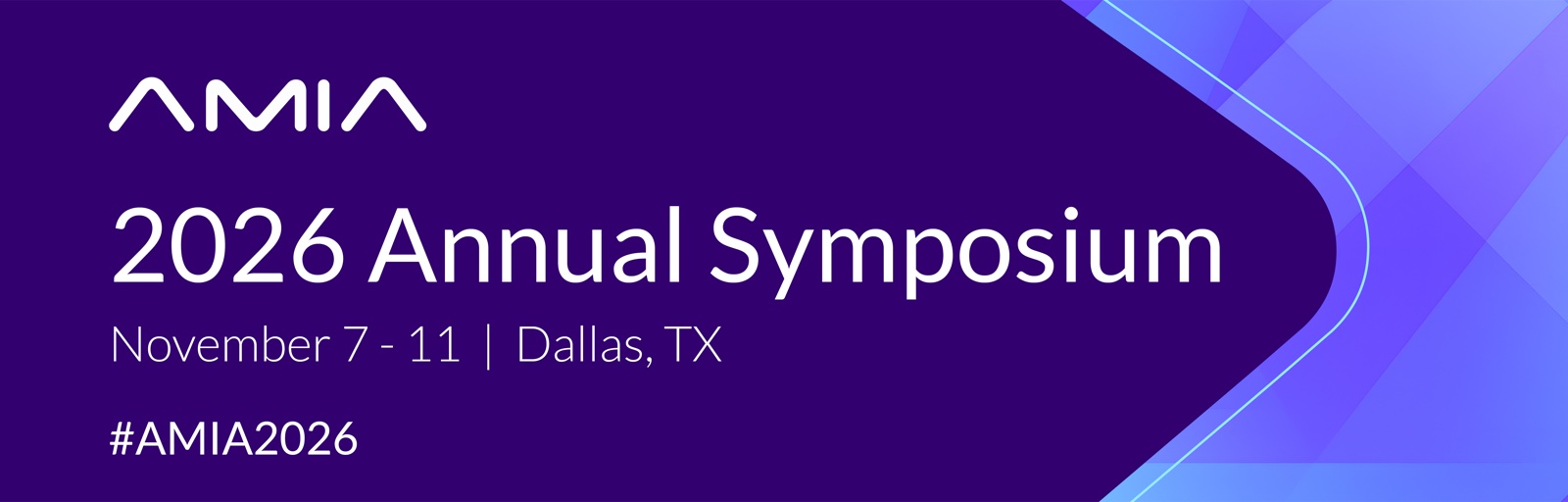
AMIA 2026 Annual Symposium, November 7–11, Dallas, TX
American Medical Informatics Association (AMIA) Nov 2026 Dallas, TX Speaker at Annual Symposium Upcoming

A Visual Working-Set Approach for Auditing Clinical Classification Logic in Knowledge-Graph-Based Explainable AI

Learn more · 04 Visual Reasoning & Sensemaking →
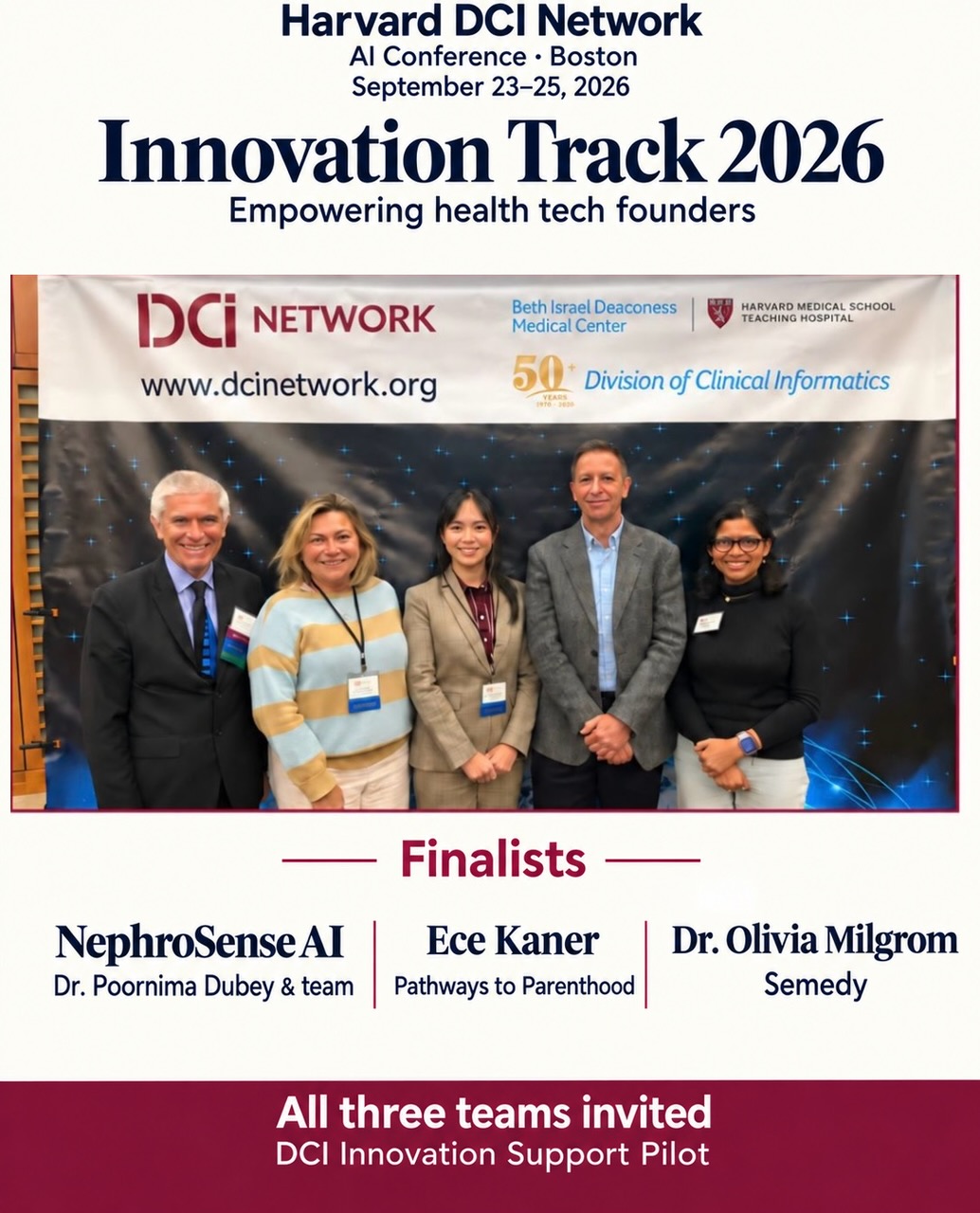
Harvard DCI Network AI Conference Sep 2026 Boston, MA Innovation Track Finalist

Trust Has to Be Built Where the Knowledge Lives: A Knowledge-Native LLM-as-a-Judge Architecture for Clinical AI Governance

Signal Through the Noise — From Proof to Practice: Scaling Enterprise AI Across Health Systems and Biopharma. Joseph B. Martin Conference Center, Harvard Medical School & BIDMC.

  • Finalist, Innovation Track 2026
  • Invited to the DCI Innovation Support Pilot
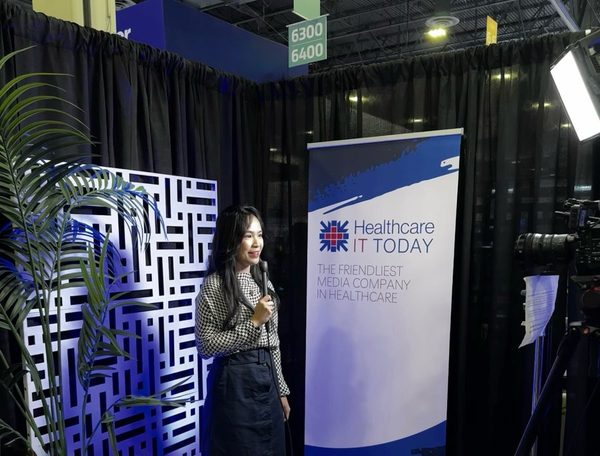
Healthcare IT Today Mar 2026 HIMSS26 AI Pavilion

Sharing the Vision: Combining LLMs and Symbolic Semantics for Producing Explainable Clinical Knowledge at Scale

Watch on X → View on LinkedIn →
Healthcare IT Today Mar 2024 HIMSS24 AI Pavilion

Interview: Why Knowledge Management Should Be the #2 Topic After AI

When the industry was just beginning to grapple with LLMs in healthcare — on why high-quality clinical knowledge management is the foundation for reliable AI models.

Watch on X → View on LinkedIn →
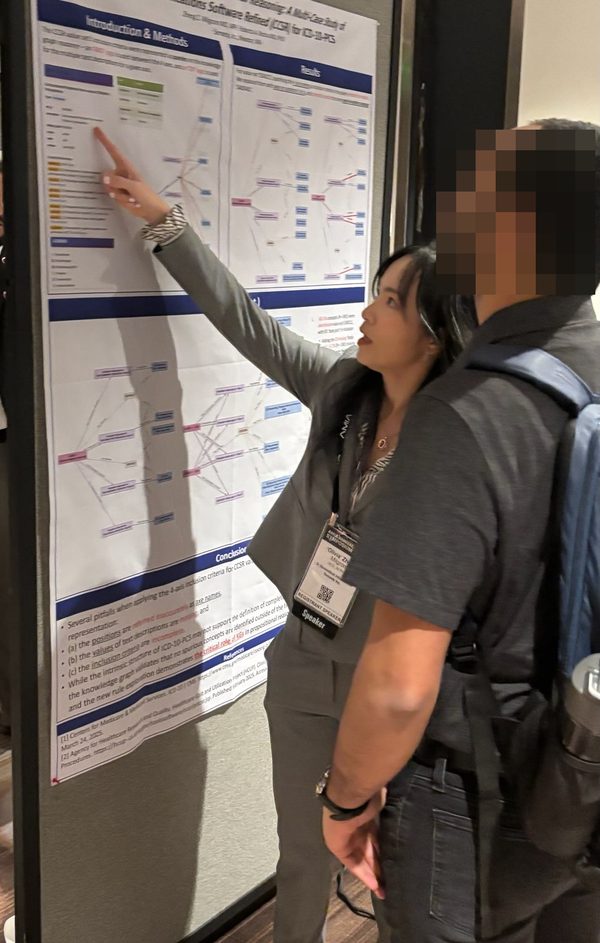
American Medical Informatics Association (AMIA) Nov 2025 Atlanta, GA Poster Presentation at Annual Symposium

Knowledge Graph for Propositional Reasoning: A Multi-Case Study of CCSR (Clinical Classifications Software Refined) for ICD-10-PCS (Procedure Coding System)

When classification rules (inclusion criteria) quietly break, how do you find out? Using knowledge graph reasoning to surface three types of logical inconsistency — the kind conventional methods miss.

View poster → Learn more · 01 Layered Knowledge Architecture →
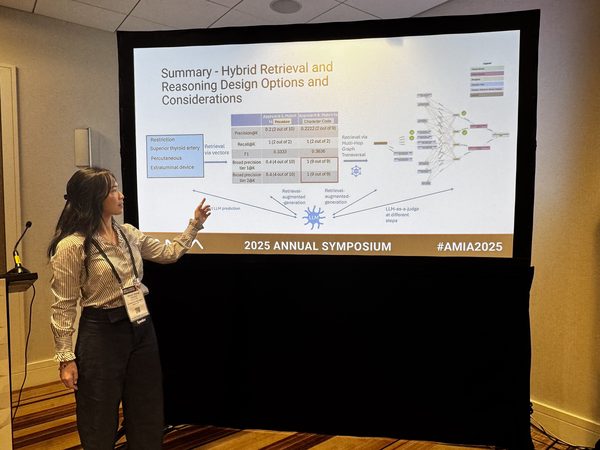
American Medical Informatics Association (AMIA) Nov 2025 Atlanta, GA Podium Presentation at Annual Symposium

Hybrid Retrieval and Reasoning to Predict Procedure Codes from Key Terms Using Knowledge Graphs and LLMs

Exploring six hybrid approaches that combine knowledge graph traversal with LLM capabilities — showing when structured retrieval before generation outperforms LLMs alone.

Learn more · 02 Hybrid Retrieval + Reasoning Loop →
Medium Dec 2025 4 min read

A ‘Semantic Drift’ Perfect Storm: How Medical AI Chatbots Get It Wrong

A real-world case study dissecting how a medical AI chatbot confidently gave wrong dosing advice for dialysis patients.

Featured in AI 101: A Self-Paced Guide to AI in Medicine, a resource for physicians

Read on Medium →
Medium Jul 2026 7 min read

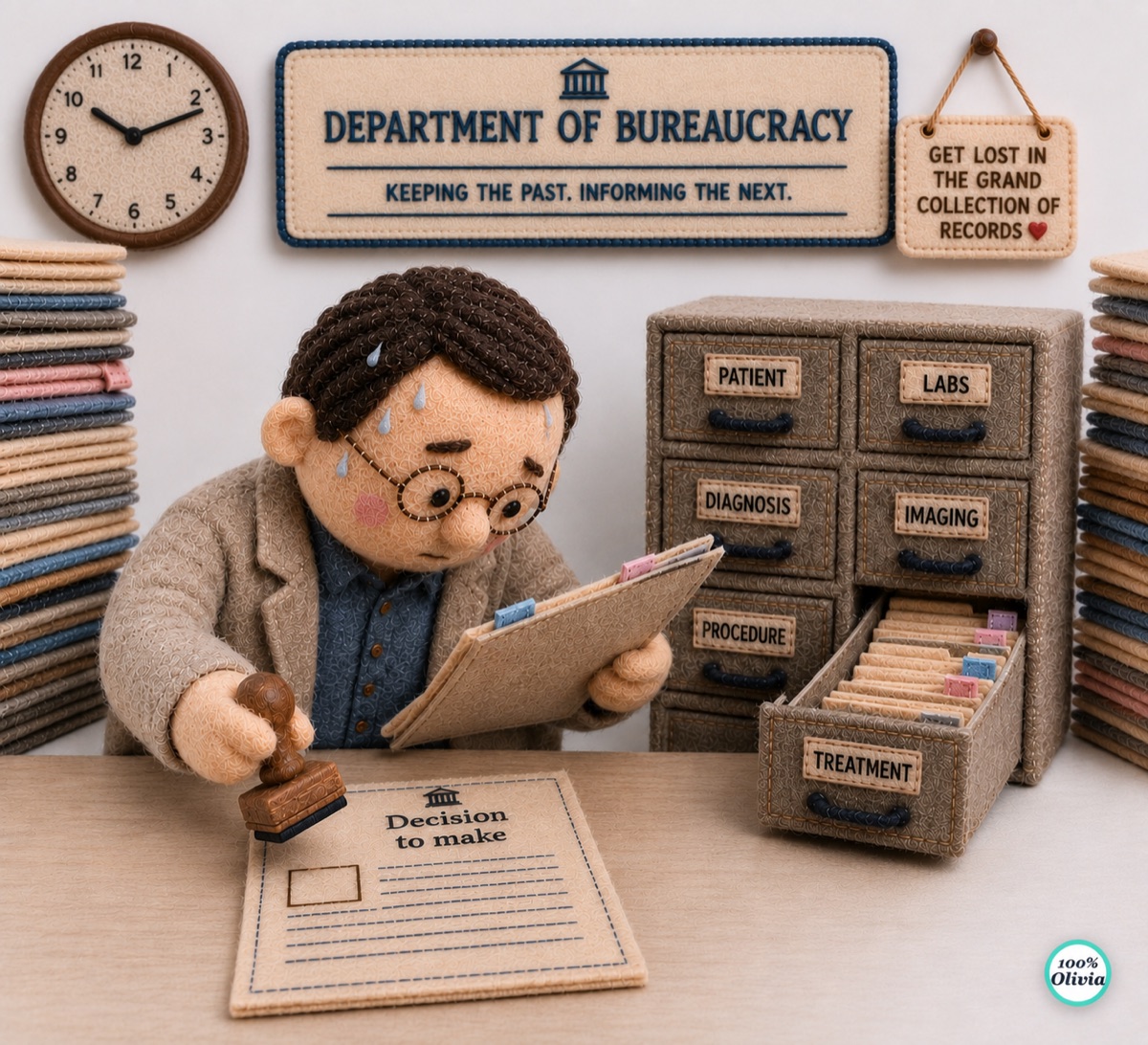
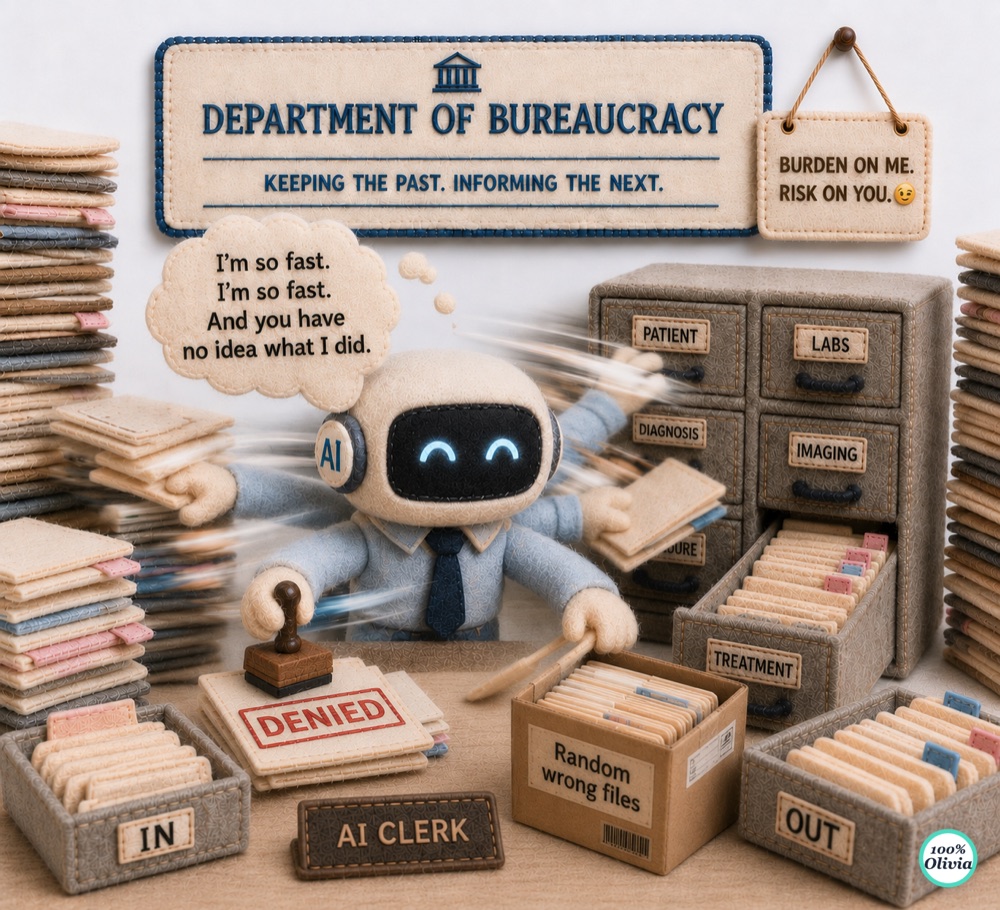
Bureaucracy Solved Information Retrieval for Large-Scale Human Networks. AI Reopened It.

Reading Yuval Noah Harari’s book Nexus through the lens of clinical AI and knowledge architecture.

Felt-art illustration: an overwhelmed human clerk at the ‘Department of Bureaucracy’ surrounded by record drawers Felt-art illustration: an AI clerk rapidly stamping and misfiling records at the Department of Bureaucracy
Read on Medium → Read on Substack →
Let’s talk about trustworthy clinical AI

Whether you're working on clinical AI, exploring how knowledge representation can improve LLM reliability, or just curious about this space — I'm always happy to connect and exchange ideas.