Tracking failure modes, empowering scalable oversight

Where clinical AI breaks

Follow one query — “baby blues” — through all five.

01

When Retrieval Misleads

Matching words isn’t matching meaning.

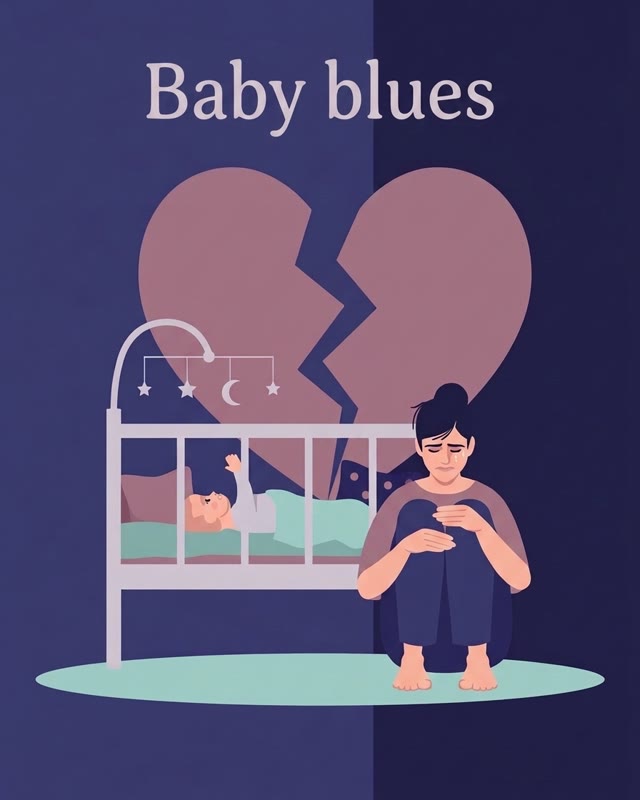
Searched for Illustration: a new mother sitting tearful beside a crib, titled Baby blues
Baby bluesPatient: the mother
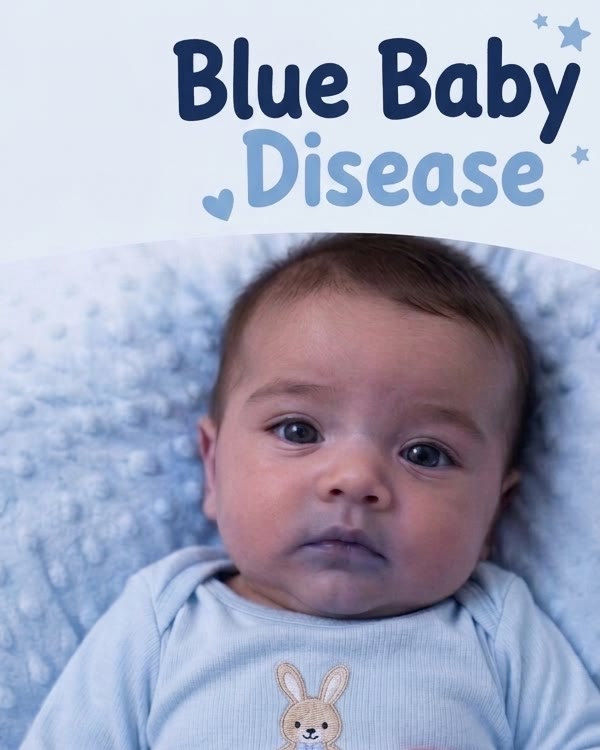
Retrieved Illustration: a newborn with a bluish tinge around the lips, titled Blue Baby Disease
Blue baby diseasePatient: the newborn

Illustrations for demonstration only

02

Semantic Drift

Every step sounds plausible. The endpoint is wrong.

  1. Baby blues
  2. Postpartum low mood
  3. Postpartum depression
  4. Major depressive disorder
Wrong
Drift in the wild: a chatbot’s wrong dialysis dosing →
03

Hallucination

AI answer
Baby blues → ICD-10-CM F53.7
No such code
04

The Explainability Gap

Scale versus verified depth.

An AI answer gives
a paragraph
Experts need to
verifyexplorecomparetest a hypothesis
Recent talk: scalable LLM-as-a-judge isn’t scalable oversight →
05

Logical Rule Misapplication

Right knowledge, wrong reasoning. Clinical logic is dense — when AI can’t hold it, it shortcuts.

Swipe to see the whole tree →

The rule as a tree, and the shortcut that skips it IF a core symptom (depressed mood OR loss of interest) AND at least 5 of 9 symptoms AND at least 2 weeks, UNLESS a substance or medical cause, THEN major depressive disorder. A patient three days after birth has a core symptom but only 2 of 9 symptoms for 3 days, so the rule is not met. The LLM shortcut jumps from the one matching branch, tearful and low, straight to the diagnosis. THEN major depressive disorder IF · AND OR a core symptom N of M ≥ 5 of 9 symptoms FOR ≥ 2 weeks UNLESS substance or medical cause depressed mood loss of interest ✓ tearful, low not reported ✗ 2 of 9 ✗ 3 days ✓ none Rule applied: not met Two AND branches fail → baby blues, not major depressive disorder LLM SHORTCUT sad + tearful ⇒

✓ met✗ not metshortcut: one matching branch taken as the whole compound rule

How I build it to hold

Bidirectional grounding — reasoning built in, not patched on. Designing systems where clinical knowledge and AI inform each other continuously — not as a pipeline, but as a layered architecture.

Human
asks the question · audits with
visual reasoning + hypothesis exploration
LLM
semantic interpreter
+ hypothesis generator
Knowledge layers
Rules & ConstraintsWhat must hold
Knowledge GraphHow things relate
OntologyHow the domain is defined
Reasoning
knowledge computation
+ verification

↻ One loop, not a pipeline — any step can send work back.

01

Layered Knowledge Architecture

‘RAG is dead’ — store-and-retrieve was never enough. Even knowledge graphs, Gartner’s fastest-rising context layer, are one layer of three. Clinical logic has to be proven, not looked up.

In practice: AMIA 2025 poster →
02

Hybrid Retrieval + Reasoning Loop

The tension persists:

  • real-world knowledge is incomplete
  • contradictory explanation paths arise

Verifying at scale against an explosion of clinical and AI-generated knowledge demands more than an LLM or symbolic reasoning can do alone.

In practice: AMIA 2025 podium talk →
03

Automatic Evaluation at Scale

  • Evaluation store
  • Prompt management

Every answer traced to its context and intent.

Configurable Auditable Explainable Enterprise-scale Governable
In practice: Harvard DCI finalist talk →
04

Visual Reasoning & Sensemaking

Explainability, taken to its visual form.

Experts move from open-ended investigation to focused hypotheses.

✗ Surface inconsistencies ⋯ Expose assumptions
In practice: AMIA 2026 talk →
A visual working set: from open-ended investigation to a focused hypothesis A lens wanders across a dense knowledge graph, then settles on a small working set. Inside it, one hypothesis path lights up, an inconsistent node is flagged, and an unstated assumption shows as a dashed link. ✗ inconsistency unstated assumption open-ended investigation … → focused hypothesis
Real or AI? Teaching kids to tell the difference

In art and in AI, the same question applies. I wrote a song, made a music video, and brought a dancing robot to an elementary school festival to ask it.

🤖

AI Dance Room

Real or Fake Animals? You Guess!
🐾 🐷 🕊 🐾 🐷
🔍 You Are AI Detectives!

▶ Play ‘I Need to Zone Out (and Dance Now)’ — Real or Fake?

👀 Round 1 0:00 – 0:30 Real or fake animals?
👀 Round 2 0:30 – 1:00 Real or fake animals?
👀 Round 3 1:00 – 1:30 Real or fake animals?

🎤 Bonus: Who Sang This Song?

A) Olivia Milgrom - me
D) The principal from your elementary school
B) AI / Robot
E) Rumi from K-pop Demon Hunter
C) Taylor Swift
F) The pelican/bird in the video

“I Need to Zone Out (and Dance Now)”

I made this song and music video — and played it at an elementary school festival where kids tried the guessing game above. ▶ Press play the music video and try the guessing game yourself!

Robot Dance Performance

If you have guessed correctly, a real robot would dance to the song — showing kids how AI, music, and robotics connect.

Let’s talk about trustworthy clinical AI

Whether you're working on clinical AI, exploring how knowledge representation can improve LLM reliability, or just curious about this space — I'm always happy to connect and exchange ideas.